

Plums & Stitches.
Plum harvest and mending pillowcases.

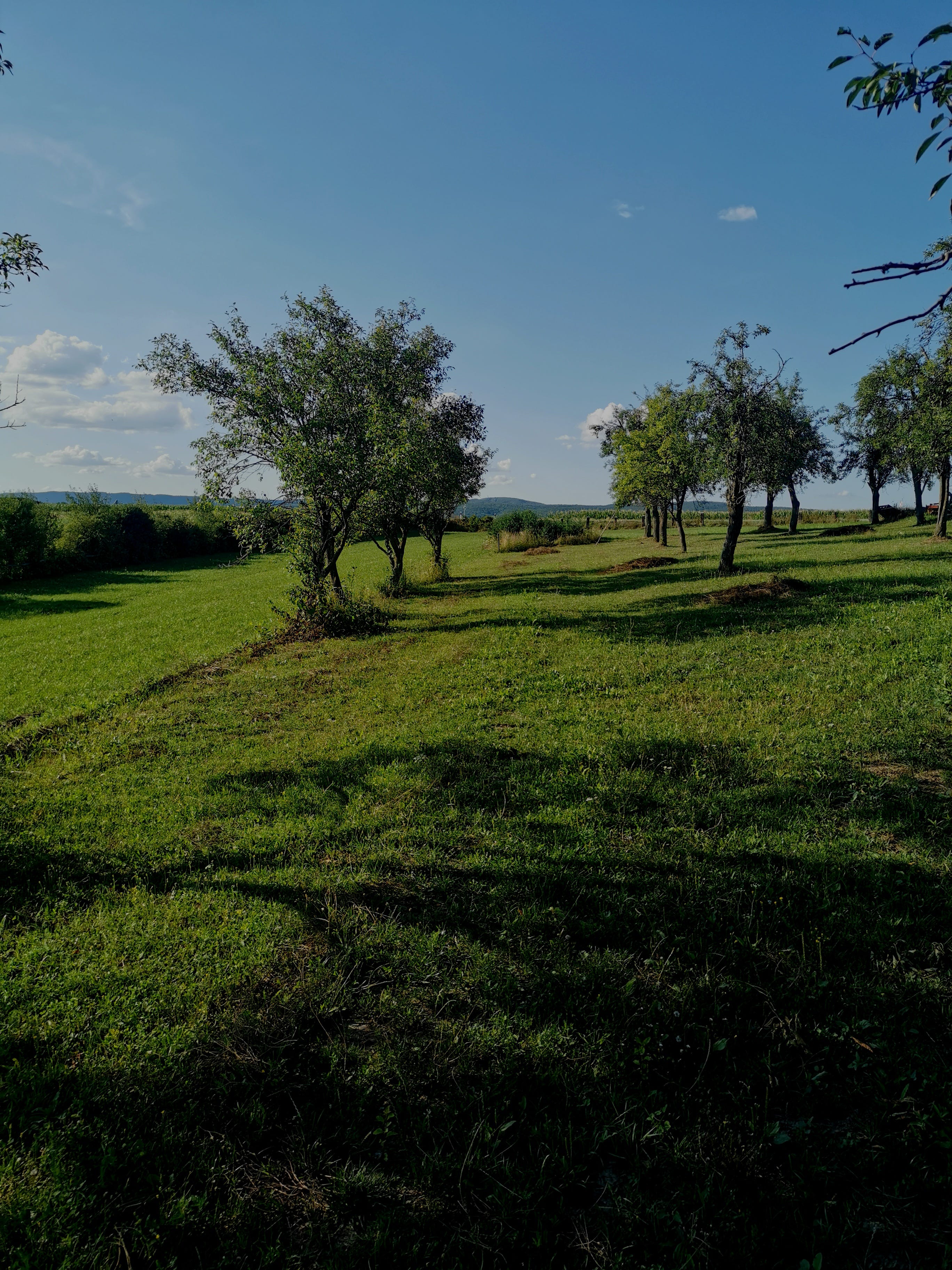
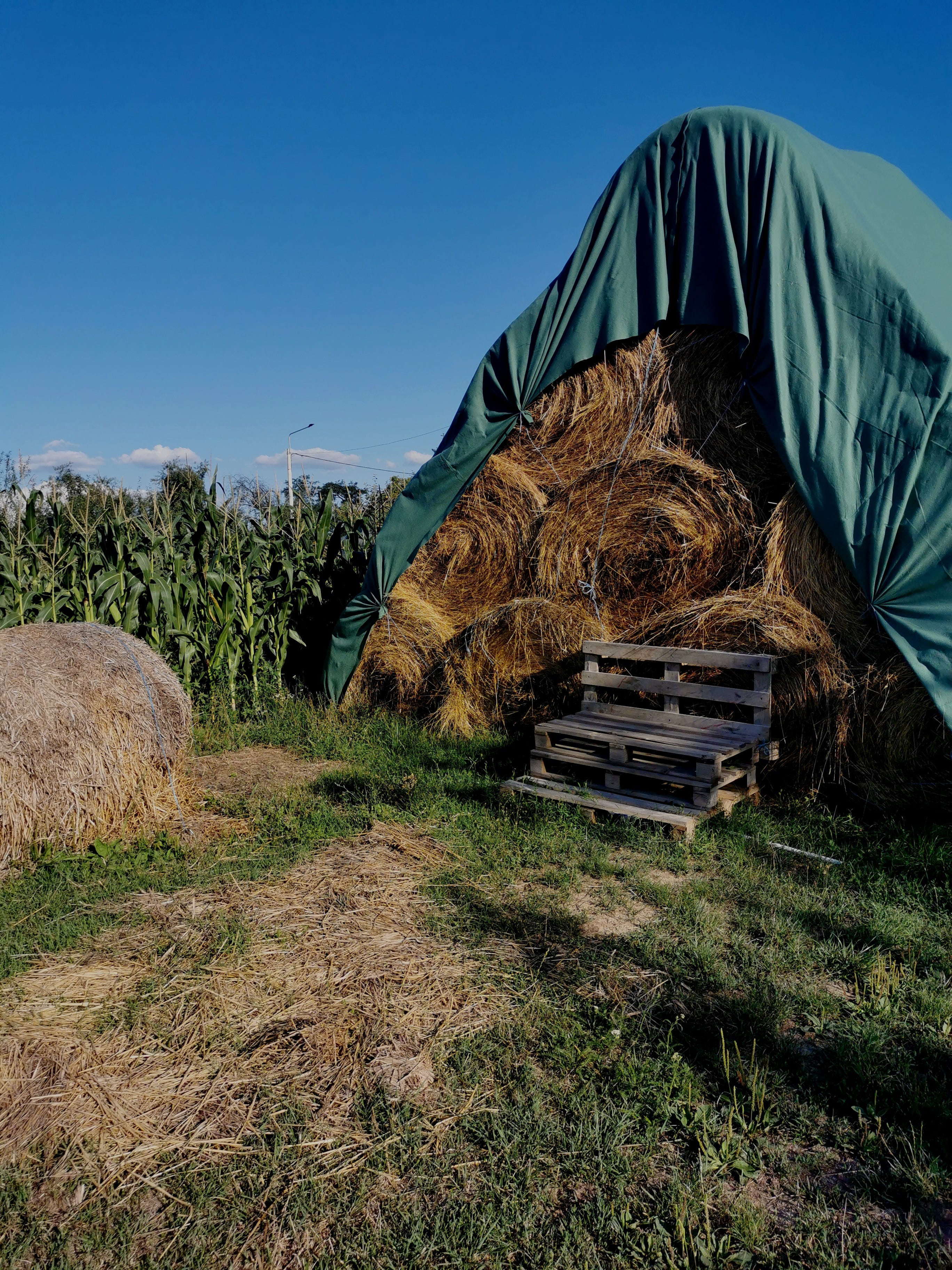
I’ve returned again to my parents’ countryside home at the height of summer, when everything is gilded warm summes hues. Passing the garden and neighbouring fields, my eyes rest on the huge round hay bales, stacked neatly beneath dark green tarpaulins. They serve as protection against the coming rains. Last year, one such bale stack sheltered a fox family. My father would watch them quietly from a distance, enchanted by the way they tumbled and leapt. But when the bales began to smell of the prey they dragged back to their hidden den, he moved them on so the foxes disappeared to find another home.
Beyond the bales, Lisa wanders slowly across the meadow. She is our coldblood horse, broad and calm. Her coat is dark brown, but in the high summer sun it glows with reddish undertones. Below meadow where she wanders, a hedgerow full of wild strawberries. When we were here in June, my father, my son and I went there and gathered those small ruby fruits. Wild strawberries taste different to anything from a shop. Sweet with a hint of something green and woodland. All around them spread field forget‑me‑nots (Myosotis arvensis), their tiny five‑petalled flowers no bigger than a fingernail, pale blue with a yellow eye. The stems are softly hairy, leaning and curling.
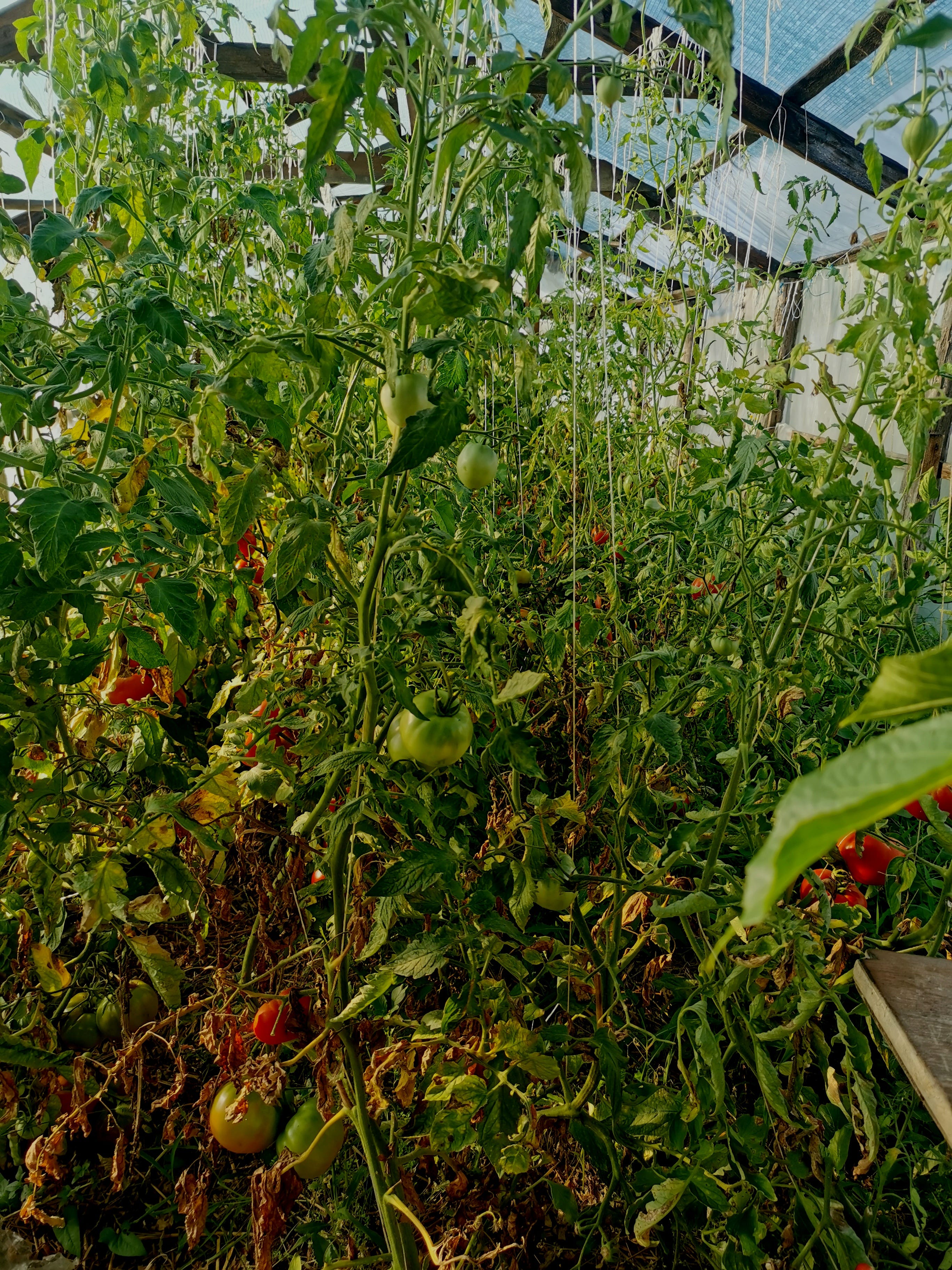
Further down, my mother’s greenhouse breathes in the heat of the day, its doors flung open so the air can move and the plants can rest in shade. Here grow her tomatoes, three kinds in all. The ordinary round red ones that taste like the sun and smell of warm soil. Then there are the oxheart tomatoes (“volovsko srce” in Croatian, named for their shape like a great, full heart). They hang heavy on the vines, flesh thick and almost creamy. And then the cherry tomatoes, small as marbles, glossy red beads in cascading cluster. You pop one in your mouth and it tastes like sunlight and rain all at once.
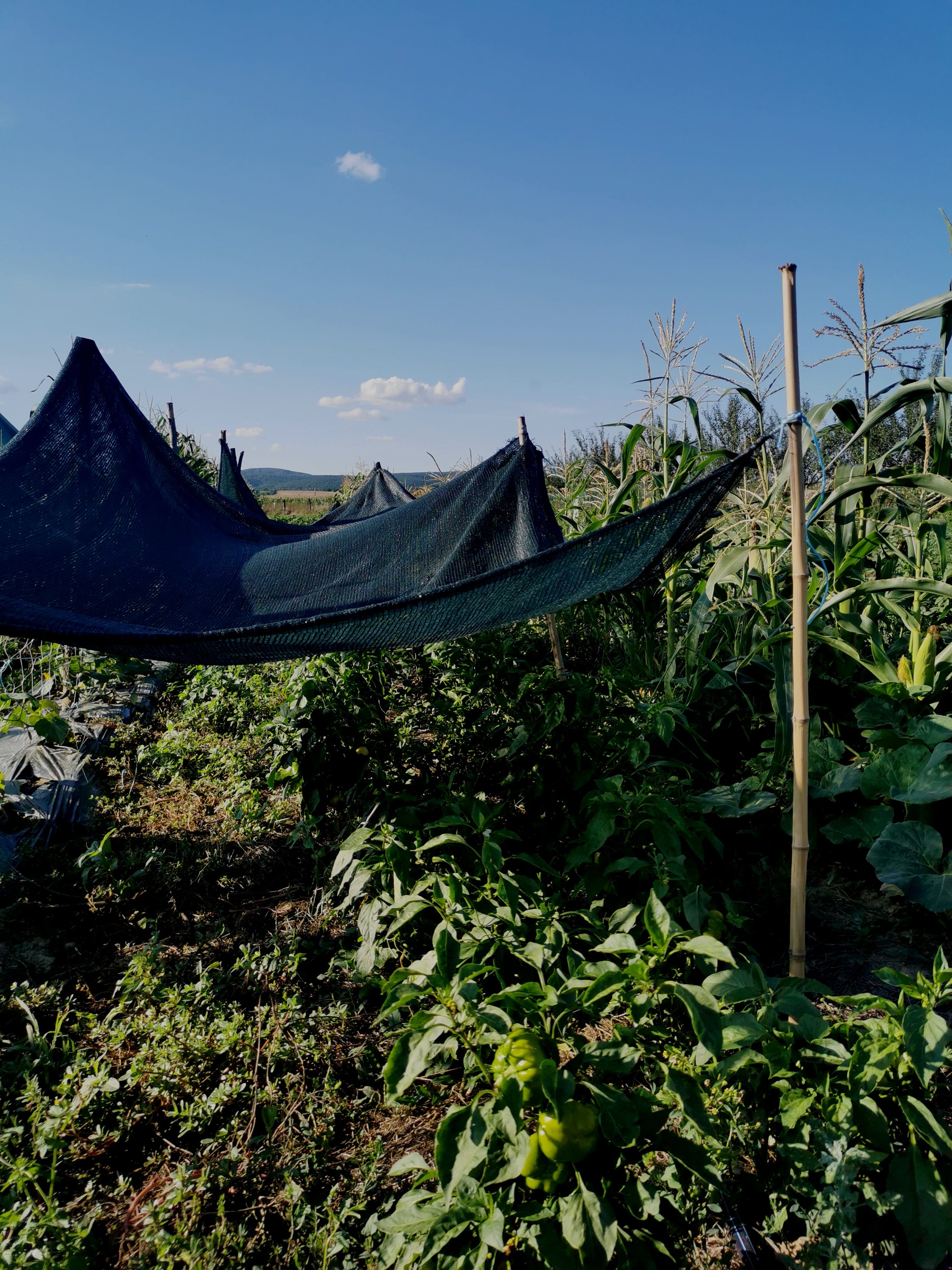
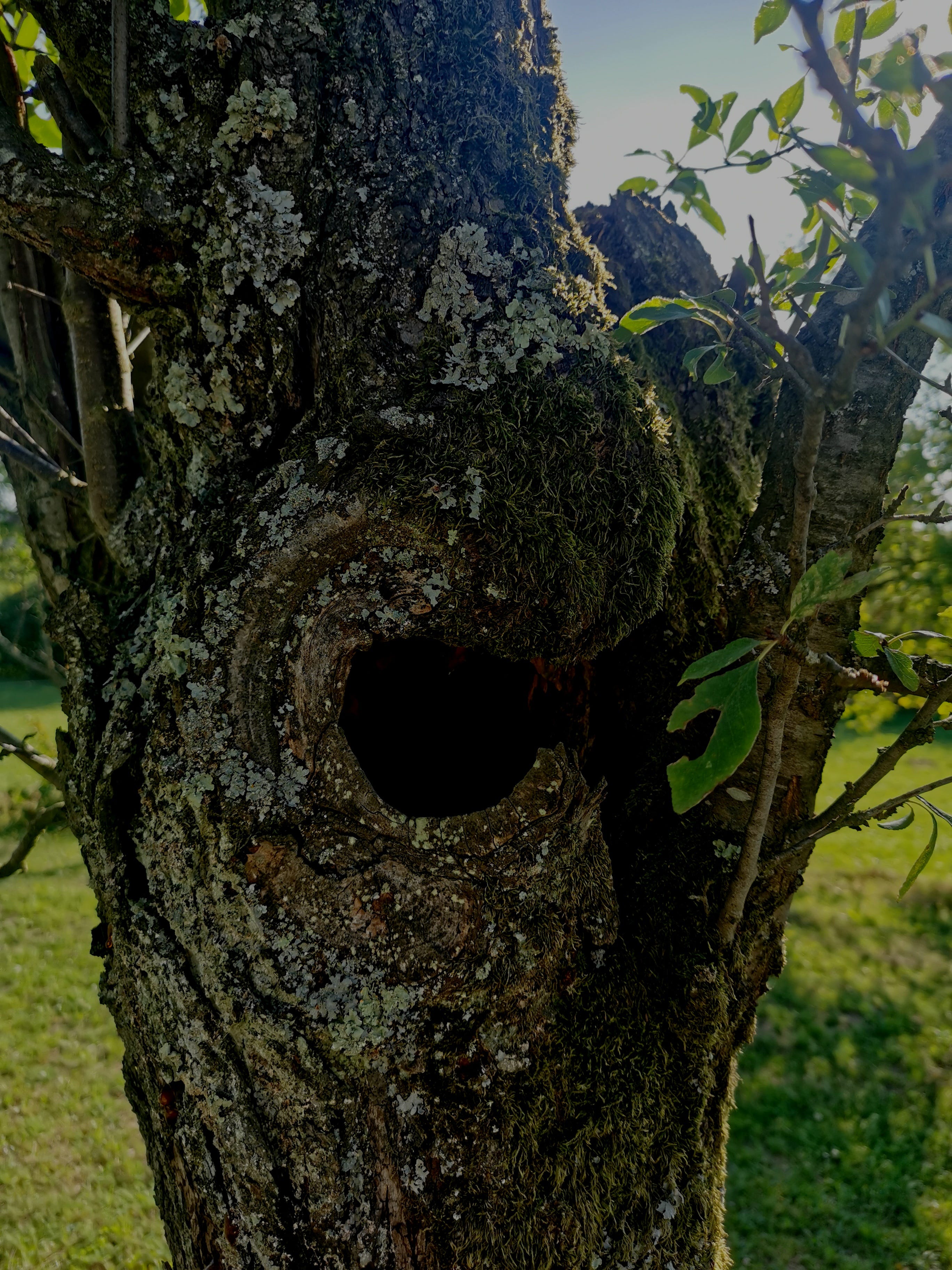
In the greenhouse, on wooden beams, hang old garden tools on weathered beams, straw still scattered along the beds, and hoses stretched across the ground. A large water barrel sits nearby on a trailer, filled daily. My parents drive the tractor down the slope to the village well, pump the cold water and bring it back home. Behind it, the garden unravels. Hollyhocks now without bloom, sunflowers taller than me, dahlias lifting their heavy heads, orange and crimson. Rows of raspberries, blackberries, and young fruit trees—pears, apples, peaches. They are young, a small orchard-in-the-making. Beyond, the potatoes, cucumbers covered in green mesh, stalks of corn whispering in the wind. Below garden, the old plum orchard, trees older than my father, bark rough and furrowed, some trunks hollowed deep. My son and I peer into those hollows, imagining small owls tucked inside, watching us back. Here, we are at peace, filled with curiosity. Walking and running, imagining and telling tales. We slow down, we breathe and surrender to simple life.
This time of year, my mother moves beneath those trees with a long wooden pole, steel hook at the top. She shakes the branches and we wait, baskets at our feet, as the plums rain down. We collect them for rakija, the strong plum brandy that has run through Slavonian kitchens for generations. I don’t even like the smell of it. It’s sharp, fiery, the kind of scent that lingers in the back of your throat, but my parents make it anyway, for tradition, for pride, and this year especially, for my brother’s wedding to come. In our part of the world, you cannot have a wedding without it; it’s as essential as bread. And while we gather plums, the sky above is never still. Around twenty swallows swoop and loop over our heads. They fly so close you can feel them—a cool flick of air as a wing almost brushes your hair, wind by your ear. Along with the dogs and cats that trail us, they make a kind of moving company, a reminder that even in quiet work, we are not truly alone. While we were gathering plums, my little girl walked beside me, holding my hand. She wore her floral romper and colorful sandals. Every now and then, she would grab a branch and tap it against the rough bark of a tree. Meanwhile, my three-year-old boy was happily jumping over piles of freshly cut meadow grass. The grass, now brown and dry, was full of wildflowers. It looked tangled, like the cozy home of a little hedgehog or a mouse straight out of a fairy tale.
For the past two days, rain has been falling. At night and through the long mornings, the air has cooled, slipping below twenty‑four degrees, and sometimes even further, down to sixteen or eighteen. It’s the kind of chill that asks for woollen socks on bare feet and the pulling of jumpers from the bottom of old closet. The kind that makes you wrap yourself twice before stepping out the door. Boots have become a necessity. Whenever we come back from a walk, we leave a trail of muddy half‑moons by the door. These days feel like the whisper of autumn.
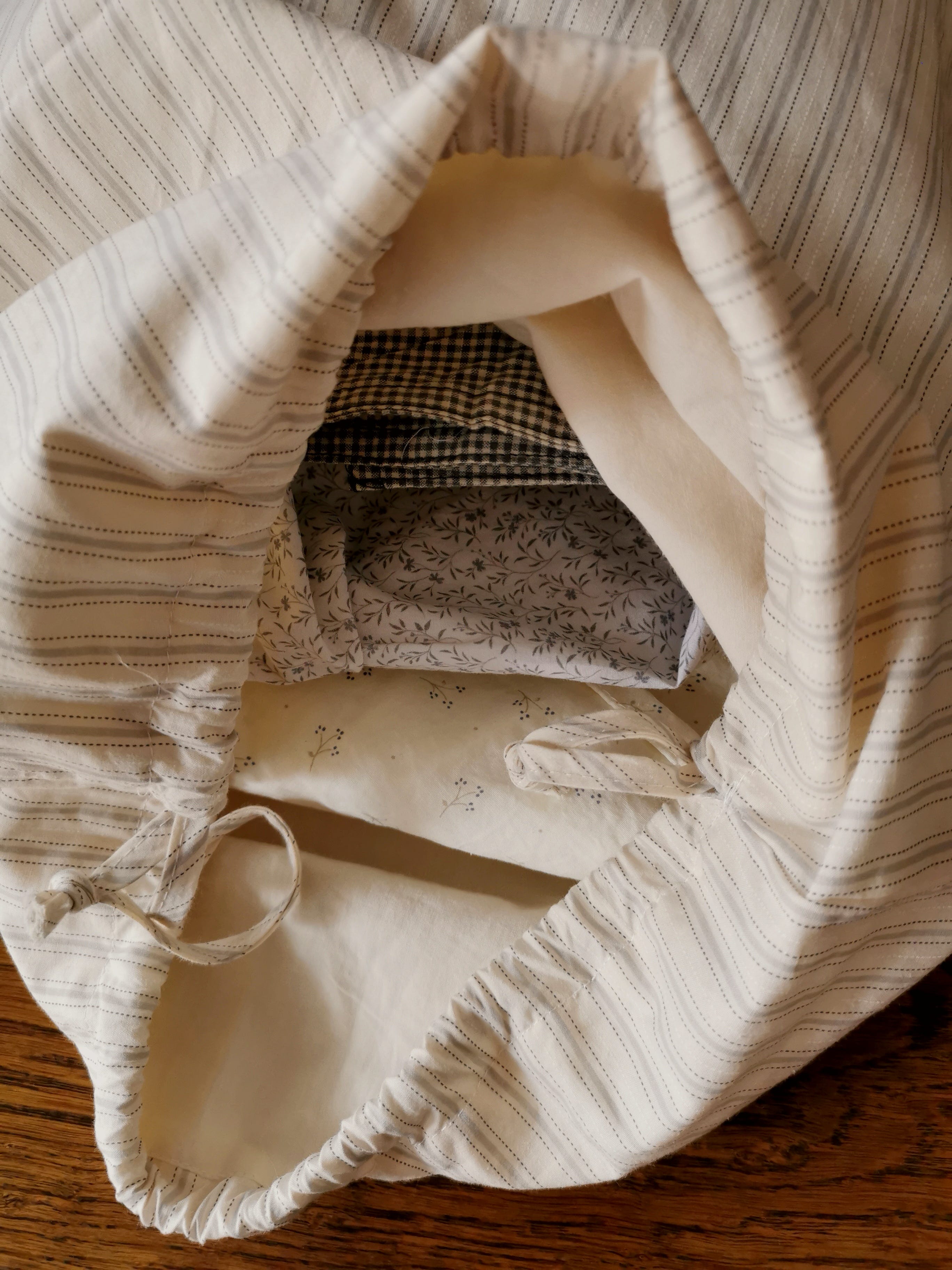
Inside, the house takes on a different rhythm. I’ve pulled out my striped drawstring bag, full of pillowcases that need mending. Floral, striped, checkered. The rain gives permission to sit and stitch, to mend and create. I come from a line of women who loved—and some still love—to knit and sew and embroider. I remember my grandma always knitting wool socks for fall and winter time. Whenever they would fall apart, she would patch them up with new yarn. I have fond memories of my mother teaching me from an early age how to sew and mend clothes. She would pull old fabrics from the bottom of our closet for me to make clothes for my sister’s dolls. And I adored it. I felt confident in myself because I knew how to mend my own clothes too—how to preserve them and prolong their life. Even then, it made me happy.
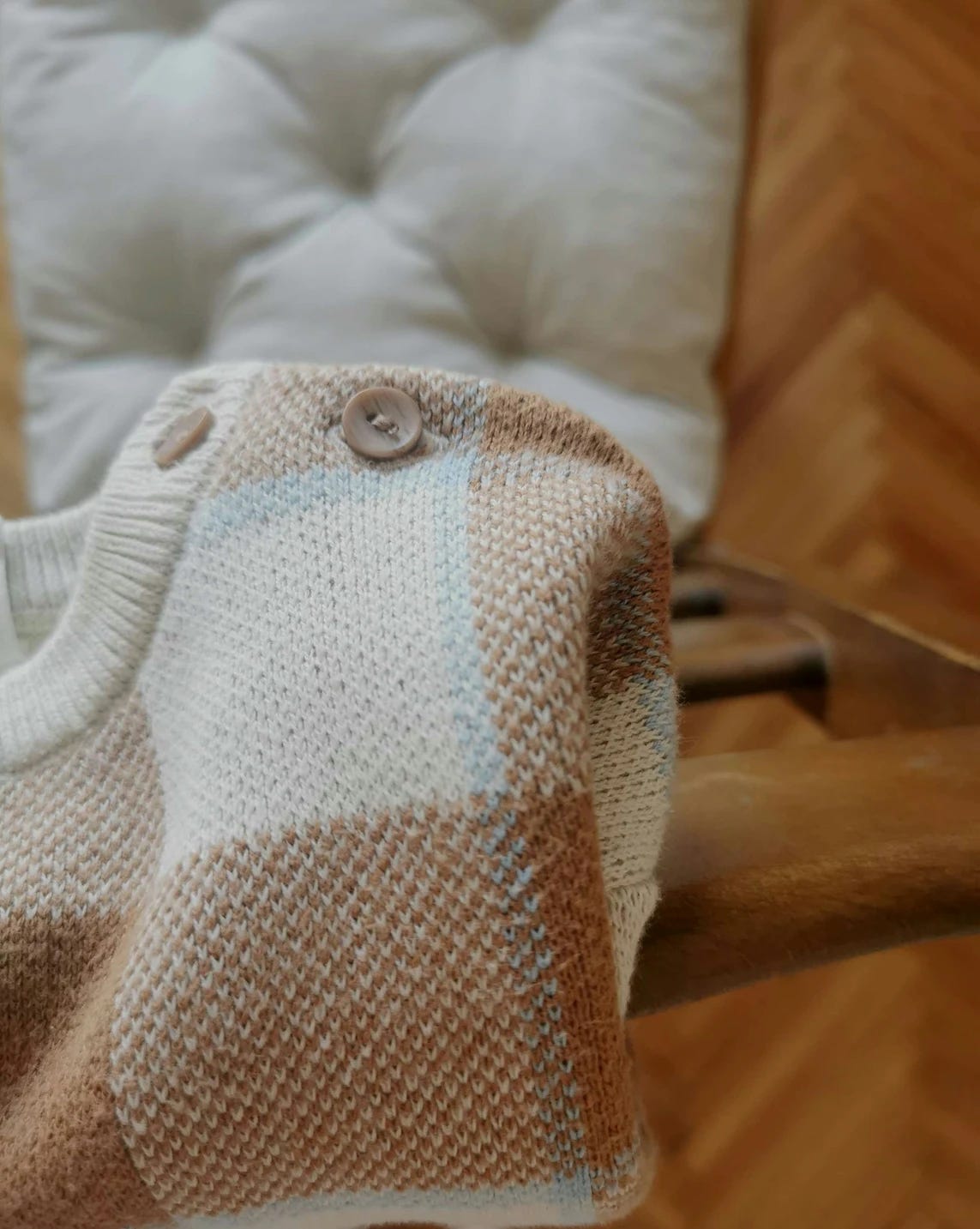
In the pile of pillowcases, there was a beautiful brownish jumper with a missing wooden button. Since I’d saved that missing button, I simply sewed it back on. But there’s something new this season. I finally bought myself a sewing machine. It’s a Brother CS10s, clean white with a deep red stitch panel and a small digital screen glowing softly, showing tiny numbers and symbols. It hums gently when switched on. It’s modern and neat, but it feels like it belongs here in the countryside, on my mom’s wooden table, surrounded by cups of tea and a pile of fabrics waiting for their second life. My husband and my dad helped me put all the pieces together. And then, in the middle of all this quiet excitement, my son came over and asked if he could sew. His eyes were wide, and he hovered by my elbow like he was waiting for permission to touch something magical. He chose the stitch pattern himself, carefully pressing the little button. Then, with his small foot, he pressed the pedal a bit too hard at first, the machine jumping to life, the needle darting. He laughed. Me too. I gently pulled pale blue cotton fabric scrap under my fingers, guiding it softly while his foot tapped again, more gently this time. Together, we made a row of five different kinds of crooked but beautiful stitches. The machine hummed, and for a moment the room felt still. My mother was watching us with a knowing smile.
So now, with my new sewing machine humming on the table, my son beside me, and my mother close, it feels like all of that, the past, the present, and the future is being stitched together. Something old and something new were meeting in this old countryside kitchen this afternoon: my grandmother’s patience, my mother’s hands, my son’s curiosity. All stitched into one pale blue line.
PS: I’m keeping all my posts free for now, but if you’d like to support these letters, a free subscription helps me keep going.
Little suggestions:
A letter from autumnal field. If you are like me and waiting for autumn days. Read it here.
The arrival of July. Step into story here.
I love my mom’s garden, and I love making sketches of it, illustrations to. But before all that I always write tiny notes about our work there. So you can read them now too.